
The Bay of Cádiz in Andalusia, southern Spain, is something between land and water. Depending on the tide, one or the other takes over. Flamingos speckle the lagoons pink in one of southern Europe’s most biodiverse wetlands, while the landscape is furrowed by long water basins. In these “esteros”, separated from the sea by embankments and sluices, the Romans once farmed fish such as sea bream and mullet. Spanish chef Ángel León cultivates something else here: the plant Zostera marina, known in English as common eelgrass.
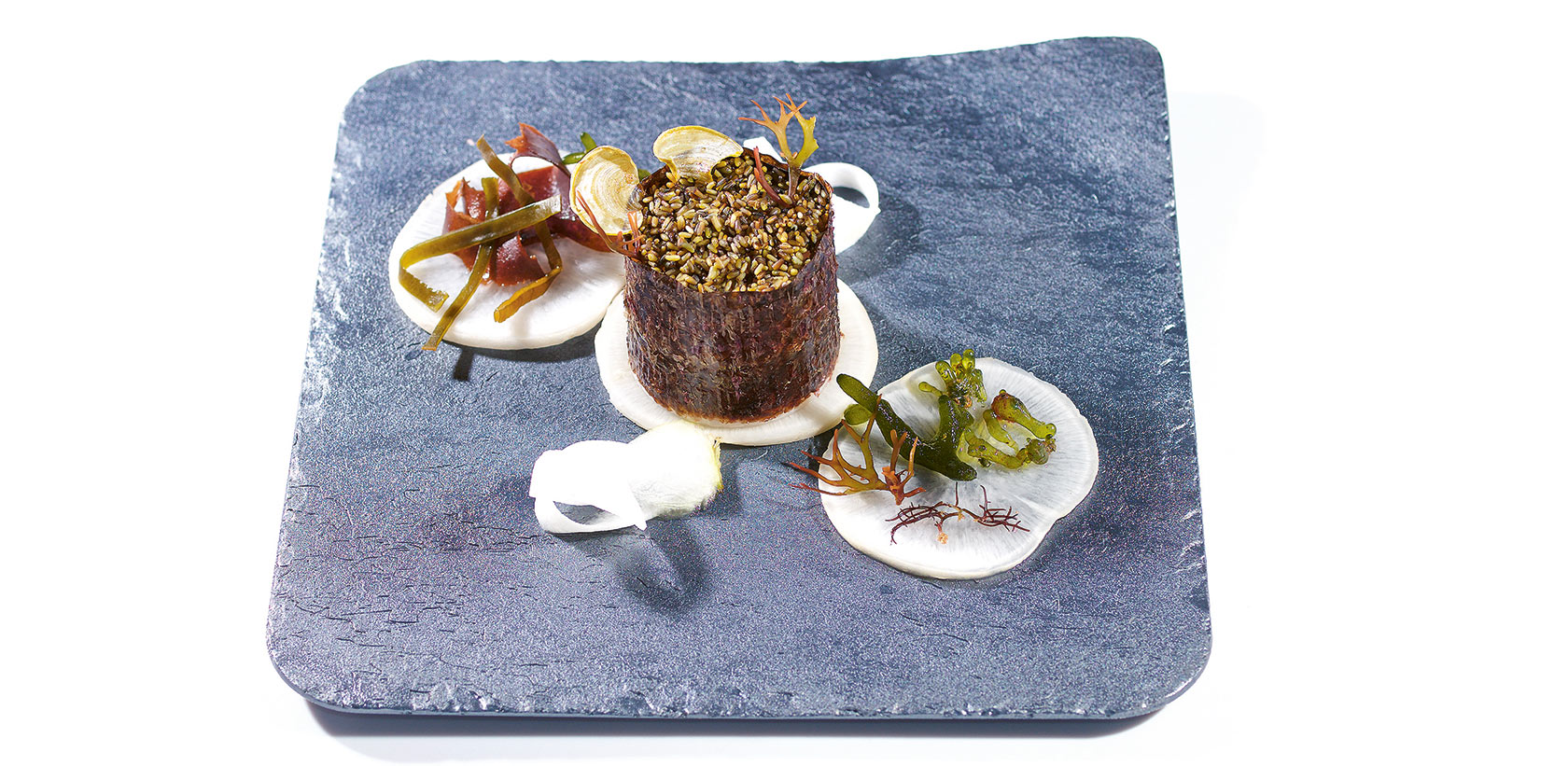
The three-star chef runs the restaurant Aponiente in an old tidal mill in the middle of the marshland. In his homeland, he is also known as “El Chef del Mar”, the Chef of the Sea, because he uses all kinds of sea plants and animals and has even served his guests plankton that glows in the dark. Now he is experimenting with the seeds of common eelgrass to explore their culinary potential. He also calls the small grains, which look like slightly larger chia seeds, “sea rice” or “sea grain”. He has already tested grinding them into flour for bread and pasta and using them in traditional Spanish rice dishes.
A new delicacy: maki sushi made from seagrass seeds
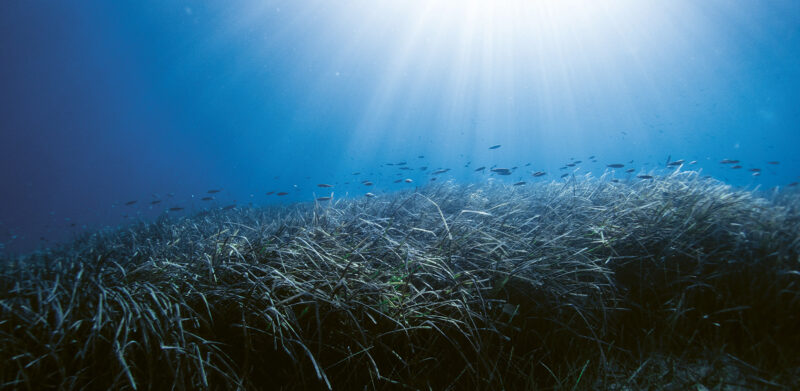
When León went public with the idea in 2021, the media response was enormous. For now, however, the whole thing remains little more than an experiment by a bold avant-garde chef. “After two months of cultivation, we managed to harvest just half a kilogram of seeds by hand,” says José Lucas Pérez-Lloréns, a marine ecologist at the University of Cádiz. He has provided scientific support for the pilot project; he calls it “seagrass gastronomy”. Common eelgrass is the most widespread seagrass species in the world; it grows from North America via the Baltic Sea to Japan. In Andalusia, however, it has reached the southern edge of its range. It is actually already too warm for the plant here. León and Pérez-Lloréns wanted to try anyway, because Zostera marina is especially promising as a food: it produces a great many seeds, which also have an impressive nutritional profile – plenty of carbohydrates, 13 per cent protein, less than two per cent fat, all comparable to rice, wheat or rye.
In the early 1970s, U.S. researchers in Arizona already baked bread from these seeds. Their conclusion: it tastes similar to rye bread – and is green. For the biologist Pérez-Lloréns, the flavour is more reminiscent of quinoa or wholegrain rice, with a faint trace of the sea in the finish if the husk is processed as well. Pérez-Lloréns is also an accomplished home cook who likes to illustrate scientific publications on the gastronomic use of marine plants with photos of dishes he has devised himself: he once made a single piece of maki sushi with seagrass seeds. Only a small bite, but still: it’s a first step. According to Pérez-Lloréns, two major food companies whose names he is not allowed to disclose are now examining whether and how food could be produced industrially from seagrass seeds, from flour and energy bars to alcoholic drinks.
The fact that, after first steps in haute cuisine, the food industry is beginning to take an interest shows that seagrass has potential as food. Scientists estimate that products made from different underwater grasses growing around the world could soon become an important resource for feeding humanity. “And yet eating seagrass is nothing new,” says the Australian biologist Nicole R. Foster. She researches palaeoecological reconstructions of marine habitats in Blanes, in southern Spain. “Different types of seagrass have been on humanity’s menu for a very long time.”
Archaeological finds up to 12,000 years old, from Canada to India, show that people ate parts of seagrass plants: the seeds, the rhizome tubers and young, soft leaves. This is hardly surprising, Foster says. After all, seagrass species grow almost everywhere along sheltered coasts – precisely where people settled. It was almost inevitable that someone would come up with the idea of trying these plants. “Even today, gathering seagrass seeds, fruits and roots for food is common practice in coastal communities around the world,” says Foster. For example, people around the Indian Ocean, from the Kenyan island of Lamu to Australia, nibble the pea-sized seeds of Enhalus acoroides, the tropical seagrass. Raw, the seeds taste slightly sweet and are crunchy, similar to almonds or peanuts; cooked, they resemble tiny sweet potatoes.
In the Northern Hemisphere, by contrast, it is mainly Zostera marina that is used: common eelgrass, the plant with which the star chef Ángel León is also experimenting. As late as the 18th century, Norwegians cooked fish in its leaves. To this day, the Kwakwaka’wakw on Canada’s Pacific coast and the Comcaac in Mexico still eat the seeds (see p. 31). “We have a sustainable source of food right under our noses,” says the biologist Foster. It is just that, in many places, this knowledge has been lost because land plants are easier to access.
As productive as rice, and far better for the environment
Marieke van Katwijk is working to change that. The environmental scientist at Radboud University in Nijmegen in the Netherlands is campaigning for the seeds of common eelgrass to be used as food on a large scale in the near future. According to her calculations, the plant could contribute to the global food supply on a scale equivalent to three to seven per cent of the global production of rice, humanity’s most important food source.
“Zostera marina is an unusually efficient source of food,” says van Katwijk. Although common eelgrass has not yet been optimised through breeding, it could already produce yields similar to rice. Wild populations in some parts of the world show this. Unlike rice, it uses neither fresh water nor land. And it does not emit climate-damaging methane, which is produced in large quantities in rice cultivation. In addition, unlike rice, common eelgrass does not have to be laboriously replanted every year. It is perennial and can bear fruit again each year. And it grows quickly – up to ten millimetres a day, meaning new seed heads can form rapidly. It does not even need fertiliser, because nutrients are brought in by the tides.
Van Katwijk expects cultivation, breeding and seed production of common eelgrass to be studied more closely now. The conditions under which it thrives best – water depth and temperature, currents, salinity and the amount of incoming light – are not yet entirely clear. But this would be essential for the large seagrass farms that would have to be established in order to protect wild beds. In many regions, these are protected and are currently shrinking worldwide as a result of environmental pressures, so they cannot be considered for targeted use. After that, yields per plant would have to be optimised through breeding. Then suitable harvesting machines would still be needed – but this, in van Katwijk’s view, is the least of the problems: “People love inventing machines.” Initial concepts already exist. The advantage is that the grains of Zostera marina grow much like cereal grains, in ears on long stalks, where they can be collected fairly easily without damaging the whole plant.
Paradise-like seagrass farms
Rising sea levels could soon cause entire tracts of land in many regions of the world to be submerged by the sea. These areas would no longer be able to be used for agriculture – but they could be used for seagrass cultivation. Such underwater farming is known as mariculture. These farms would be effective CO2 sinks, and their leaves and roots would also protect coastlines from erosion. In a research paper, van Katwijk paints an almost paradisiacal picture of seagrass farms, despite possible objections to such aquatic monocultures: mussels or shrimp could be farmed alongside them, and the sites would be attractive to eco- and food tourists. “The waters will be clear and rich in species, and special plots can be designated for recreational harvesting of farmed mussels, as well as various crustaceans and other invertebrates living in the seagrass.”
Van Katwijk, who is Dutch, believes her home country is ideally suited to seagrass cultivation – partly because of the ever-present risk of flooding, but above all because of its centuries of experience both in crop breeding and in coastal engineering techniques. There is intensive research in the Netherlands on both. In poorer, remote coastal regions of the world where sea levels are rising, seagrass farms could provide income and jobs while also reviving local food and landscape systems. So far, only a few people have understood the potential lying dormant here. But in 20 or 30 years, van Katwijk thinks, it could become a reality: “The time is not yet ripe – but it is coming soon.”
___________________
This text was translated by our partner kompreno — created with the support of various AI models, then reviewed and refined by their editorial team. kompreno curates the world’s best journalism from over 30 international outlets — including The Atlantic, Le Monde and Die Zeit — and makes it available in five languages.